Improving the performance and lightweighting of lithium batteries by preparing composite nanostructured electrodes.
| Last update: 2025/02/11 |
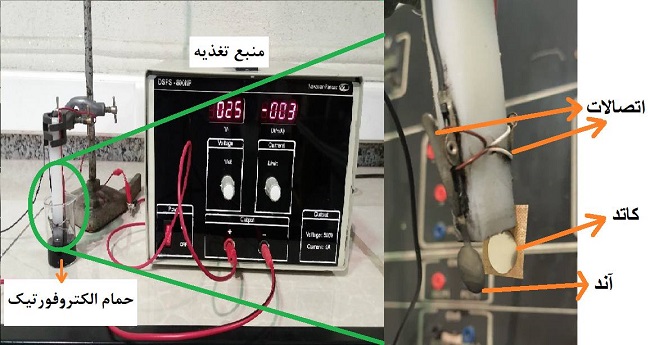
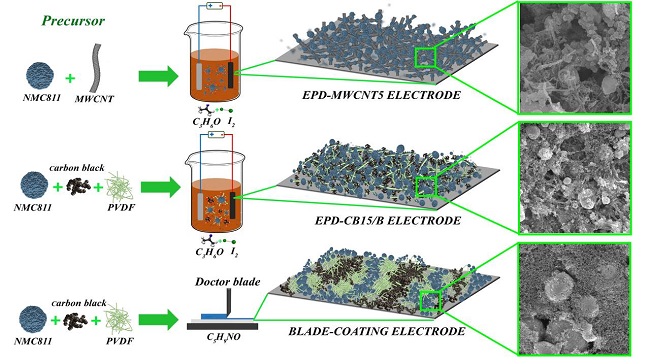
A group of specialists from Amirkabir University of Technology achieved nanocomposites as part of a doctoral dissertation, which improve the cycle life and electrochemical performance of rechargeable lithium batteries. According to the public relations office of Amirkabir University of Technology, Fatemeh Pour Salahi, a doctoral graduate, conducted a research project titled "Enhancing the Performance of Lithium Batteries by Preparing Advanced Nanocomposite Electrodes Using Electrophoretic Deposition" under the guidance of Professor Mehran Javanbakht and the advice of Dr. Ahmad Ahmadi Daryakenari. Pour Salahi explained that the reason for choosing this method was to lighten lithium batteries and eliminate certain chemicals, stating that the conventional method for preparing electrodes for lithium batteries involves creating a high-viscosity slurry from electrode materials, followed by coating them with a blade on the surface of the current collector, and finally evaporating the solvent. This method has drawbacks such as the use of the toxic solvent NMP and includes high costs and processing time. He identified the localization of the technical knowledge for preparing cathode electrodes for lithium batteries using the electrophoretic deposition method as one of the important achievements of this research, adding that in this context, the proposed method, compared to the conventional industrial electrode coating method, leads to cost reductions by eliminating the toxic chemicals NMP and PVDF, simplifying the process and equipment, and reducing the energy and time for electrode fabrication on a laboratory scale. This graduate of Amirkabir University of Technology further stated that the use of advanced structural nanocomposite electrodes compared to conventional electrodes in lithium batteries results in improved cycle life and electrochemical performance. He explained the implementation process of this project, stating that by applying electric current to a stable suspension of electrode components (using the electrophoretic deposition method) and optimizing the variables, they succeeded in achieving a uniform coating of components on the surface of the current collector. Furthermore, by eliminating the PVDF binder in the subsequent research, they obtained lighter, less expensive electrodes with a cohesive and integrated structure. For this purpose, they utilized multi-walled carbon nanotubes and sulfonated graphene sheets with a high surface area, which could serve as both electrical conductors and binders within the electrode structure. Dr. Pour Salahi stated that after the mentioned optimizations, advanced composite electrodes containing carbon nanotubes or sulfonated graphene were prepared and improved in one step using the electrophoretic deposition method. She noted that the electrodes produced were used in rechargeable lithium batteries and added that this doctoral dissertation was conducted in several sections. The first section involved acquiring the technical knowledge for preparing cathode electrodes using the electrophoretic deposition method and comparing their characteristics, structure, and performance with commercial conventional electrodes. The second section focused on eliminating the PVDF binder from the electrode structure. This researcher added that the innovation in this section lies in replacing the common conductive additive carbon black with MWCNTs, which, in addition to having high electrical conductivity, can also function as a binder. According to her, the results from the first and second sections of this dissertation were published in the Journal of the Electrochemical Society/IOP Publishing in 2023. In the third section of the dissertation, composite electrodes containing sulfonated graphene and sulfonated graphene/carbon black were prepared and compared. In the preparation of these composites, high-conductivity active electrode materials were achieved using graphene sheets and the electrophoretic deposition method. Additionally, carbon black particles and sulfonate groups used in preparing the composite structure contributed to extending the lifespan of lithium batteries. The results from this section of the dissertation were recently published in the journal Electroanalytical Chemistry/Elsevier Publishing. It is worth mentioning that prior to starting this doctoral dissertation, we improved the performance of lithium batteries by preparing composite electrodes based on nanographene sheets using the electrophoretic method, and the results were published in the journal Solid State Chemistry/Elsevier Publishing in 2020.