Inauguration of the Industry Hall at the Faculty of Electrical Engineering, Amirkabir University of Technology
| Last update: 2025/03/17 |
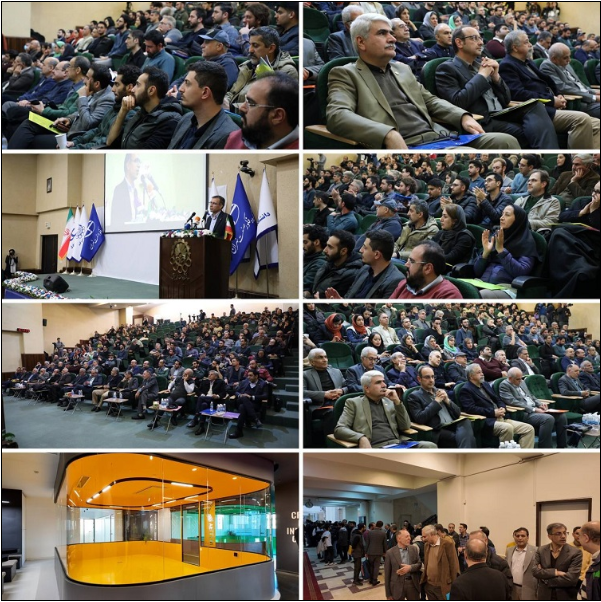
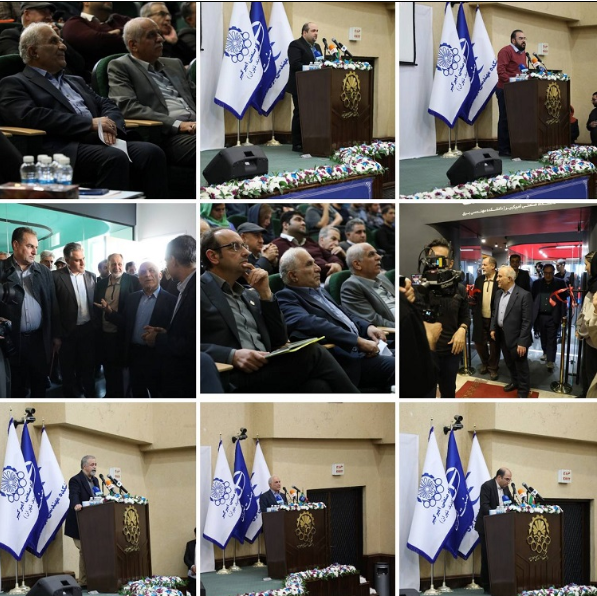
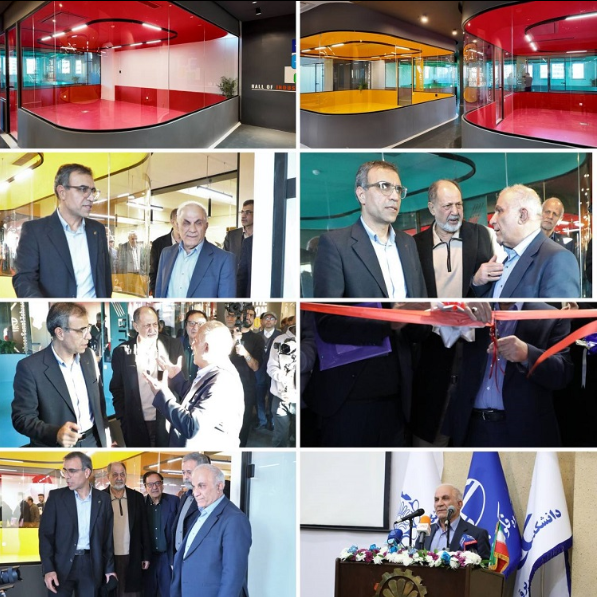
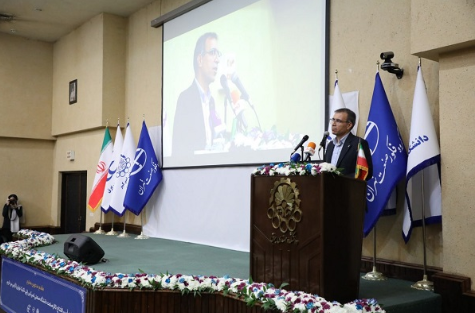
The Industry Hall at the Faculty of Electrical Engineering, Amirkabir University of Technology, was inaugurated in the presence of university and industry officials. According to the Public Relations Office of Amirkabir University of Technology, the Industry Hall at the Faculty of Electrical Engineering has been established in a 380-square-meter space with the aim of hosting major industries and facilitating direct interaction between the industry and students as the future human capital of the country. This initiative was made possible with valuable contributions from the private sector and without reliance on government funding, in a location closest to student classrooms. This hall consists of six separate spaces, which will be allocated to different companies. The Chancellor of Amirkabir University of Technology announced the launch of the Electrical Industry Hall at the Faculty of Electrical Engineering and expressed hope that similar initiatives would be implemented across other faculties at the university. Dr. Alireza Rahaei, in the inauguration ceremony of the Industry Hall at the Faculty of Electrical Engineering, Amirkabir University of Technology, congratulated all engineers at the university and across the country on Engineer’s Day and stated: "The establishment of an Industry Hall in the Faculty of Electrical Engineering is a positive development within the university. This hall may have multiple advantages, one of which is serving as a model at the university level so that all faculties can implement similar initiatives in various disciplines and fields." He further explained that the Industry Hall could function as an Industrial Clinic, adding: "Although we had such a clinic in the petrochemical industry in the early 1390s, where we established a center in Mahshahr, enabling direct, face-to-face interactions between faculty members and industry experts to address challenges and develop solutions." Dr. Rahaei emphasized: "One of the key benefits of establishing this hall is the opportunity for students to familiarize themselves with industrial advancements in the country. University graduates from different institutions can play a significant role in transforming various industrial sectors." The Chancellor of Amirkabir University of Technology added: "Another advantage of the Industry Hall is that it facilitates student participation in industrial internships and training programs, and in the future, it may even open pathways for employment opportunities." He highlighted that the launch of the Industry Hall should be considered an investment in training the human resources needed for the country. "Individuals who gain experience in such environments will be better positioned and more effective in shaping the future of the country's industry." The Chancellor of Amirkabir University of Technology concluded: "I hope that, gradually, various industries related to the power sector will establish their presence in this hall. This will provide students with greater exposure to different fields, including electrical power, control, telecommunications, and beyond." The Dean of the Faculty of Electrical Engineering, Dr. Ahad Tavakoli, emphasized that the goal is not just establishing connections with industries but forming a strong alliance with them, which can only be achieved through direct engagement between industries, the university, and faculty members. During the inauguration ceremony, Dr. Ahad Tavakoli congratulated all engineers on Engineer's Day and stated: "Today marks the beginning of the Industry Hall initiative. From my perspective, this hall is not just a physical space, but rather a mindset." He continued: "The Industry Hall is a pathway to creating an entrepreneurial university. We must generate wealth, which is currently not happening because universities are financially struggling." Dr. Tavakoli stressed that a financially weak university cannot be entrepreneurial or generate wealth. He acknowledged that while graduates may excel elsewhere, the global landscape is changing, and universities in the country must adapt accordingly. He further noted: "I see this hall as a driving force for development through industry-university collaboration. To achieve meaningful progress, three key pillars are essential: 1. Human resources 2. Development-driven management 3. Capital for growth." Dr. Ahad Tavakoli highlighted that universities serve as the foundation for training top-tier professionals. With over 500 faculty members and more than 12,000 students, Amirkabir University of Technology is a major academic hub. At the same time, industries require multidisciplinary expertise, including professionals in electrical, mechanical, polymer engineering, and more. Universities, therefore, play a crucial role in supplying skilled talent to meet industry demands. He added: "With a forward-thinking approach, we have decided to position ourselves alongside the industry and strengthen these three pillars. The traditional model, where professors take on industry projects individually, is no longer effective. Our goal is not just to connect with the industry, but to form a deep alliance with it." Dr. Ahad Tavakoli further explained that the university seeks to collaborate with mature industries willing to invest and integrate into the university environment, providing opportunities for students to be recruited by major industrial firms. "We need the active presence of industries within the university to establish this university-industry alliance. We expect industries to directly engage with the university and faculty members, fostering a mutually beneficial partnership." The Administrative and Support Director of the Faculty of Electrical Engineering, Engineer Hossein Yousefikhah, emphasized the importance of industry integration within the university. He noted: "Under this approach, industries will be physically present within the university, and academics must ensure that this collaboration remains two-way." During the inauguration ceremony, Engineer Hossein Yousefikhah highlighted recent changes in the faculty’s strategic direction, explaining that the current trajectory was not sustainable. He remarked: "With the rapid pace of technological advancements, traditional methods of student education are no longer effective. In the past, students would complete their academic education first, then gain industry experience. This model is outdated, and today’s students must learn both academic theories and practical implementation simultaneously." He emphasized that the traditional university-industry relationship is no longer sufficient and that the Industry Hall concept emerged to address this gap. A dedicated space on the fourth floor of the faculty has been allocated to this initiative, providing a platform for industries to actively engage with the university and fulfill their social responsibility. "We faced many challenges in launching this initiative, but the biggest challenge ahead is ensuring the industry's continued engagement. If we fail in this, the Industry Hall will become just another one-time project that fades into obscurity." Engineer Yousefikhah stressed: "We all share the responsibility of ensuring the longevity of this initiative. It is crucial to facilitate industry-university collaboration and create a sustainable cycle of interaction."

.png)
.png)
.png)
.png)